Simple, gently cooked fresh dog food recipes you can make at home with ordinary ingredients. Every recipe lists exact ingredients, steps with safe cooking temperatures, storage times and a safety note. Most are written for healthy adult dogs and work best as an occasional meal or a topper on a complete and balanced diet.
New here? Read Start Here first, then follow our 10-day switching guide, and talk to your veterinarian before changing your dog's diet.
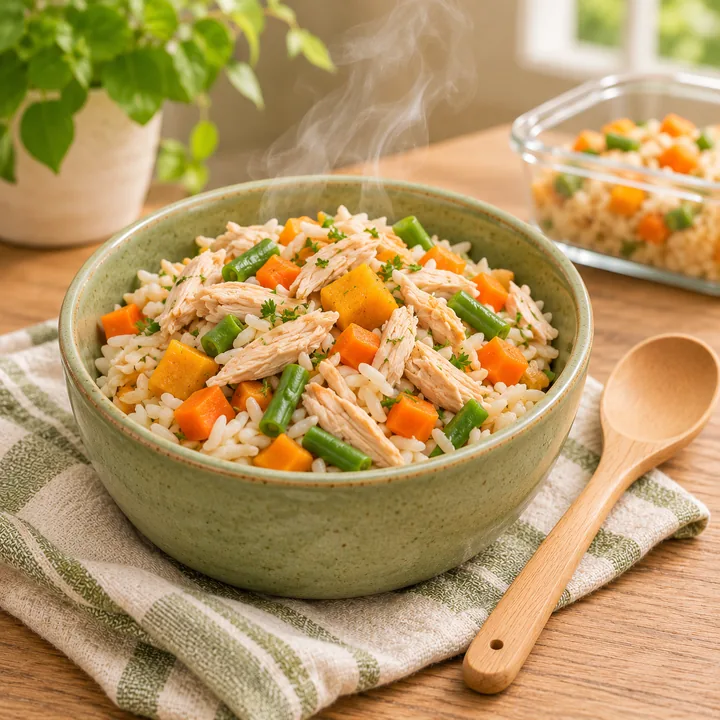
All fresh dog food recipes
View all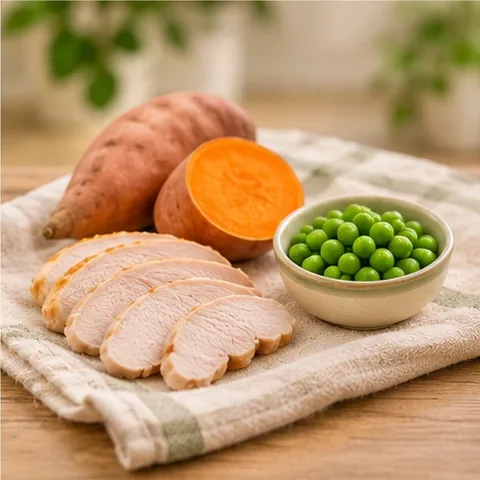
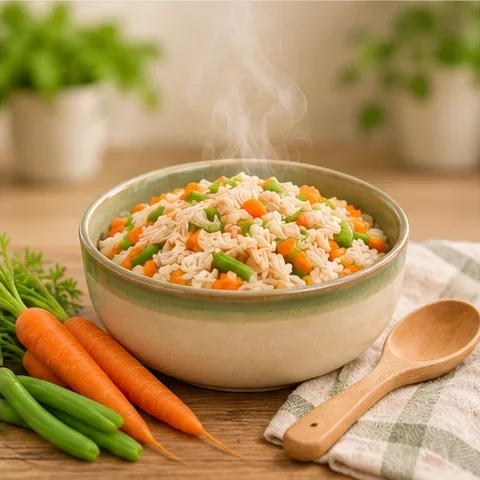
How to make fresh dog food at home
- Pick one lean protein such as chicken, turkey or lean beef. Choose a single protein if your dog has a sensitive stomach.
- Add dog-safe extras such as carrots, green beans, peas, pumpkin or sweet potato, plus a cooked grain like rice if your dog tolerates it.
- Cook it plain. No salt, onion, garlic or seasoning. Cook poultry and ground meat until no pink remains (poultry 165°F / 74°C, ground meat 160°F / 71°C).
- Cool and portion. Refrigerate up to 3 days or freeze in portions for up to 2 months.
- Check the balance. Home-cooked meals fed every day need to be complete and balanced for your dog. Ask your vet, or a board-certified veterinary nutritionist, for a plan.
What can go in your dog's bowl
| Group | Common choices | Notes |
|---|---|---|
| Lean protein | Chicken, turkey, lean beef, fully cooked eggs, cooked boneless fish such as salmon | Cook fully and remove skin, excess fat and every bone. Use a single protein if your dog has a sensitive stomach. |
| Vegetables | Carrots, green beans, peas, pumpkin, sweet potato, a little spinach | Cook until soft and chop small. Introduce one new vegetable at a time. |
| Starches | Plain cooked white or brown rice, oats, quinoa | Serve plain and cooked. Some dogs do better with less grain, so ask your vet. |
| Never include | Onions, garlic, chives, leeks, grapes, raisins, chocolate, xylitol, macadamia nuts, cooked bones | Salt, butter, sauces and seasoning are not needed. See our full safety list. |
Every dog is different. If your dog has allergies, kidney, liver or pancreas problems, ask your vet before offering any new food.
Safe cooking and storage at a glance
| What | Safe temperature or time |
|---|---|
| Chicken and turkey, including ground poultry | 165°F (74°C) |
| Ground beef and pork | 160°F (71°C) |
| Fish | 145°F (63°C) |
| Eggs | Cook until the white and yolk are firm |
| Cooling | Cool quickly and refrigerate within 2 hours |
| Refrigerator | Up to 3 days in a sealed container |
| Freezer | Up to 2 months, in single-meal portions |
| Thawing | In the refrigerator, not on the counter |
Use a food thermometer rather than judging by color. These are general food-safety numbers, and your vet may advise something different for your dog.
Recipes for every dog
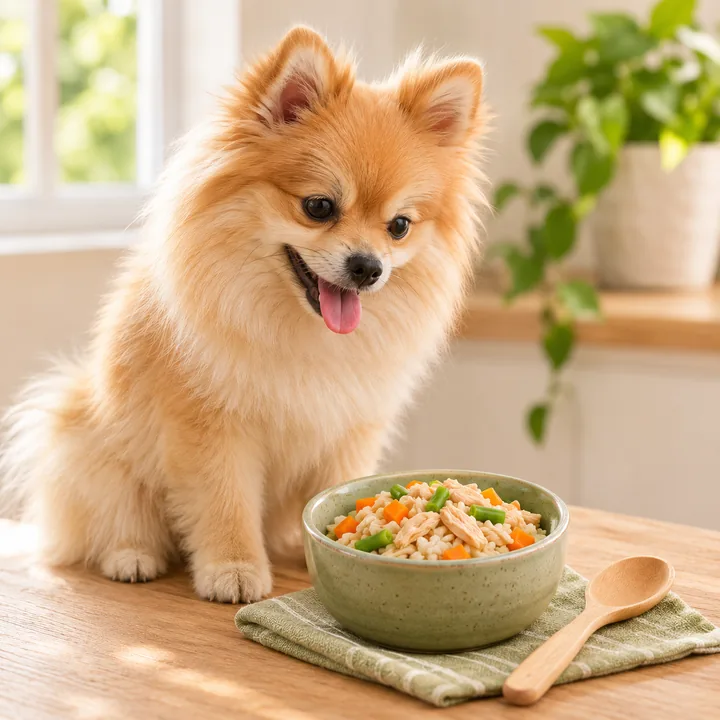
Recipes for small dogs. Small dogs eat small portions, so one batch goes a long way, and rich or fatty meals are more likely to upset them. Keep pieces small, measure every meal, and ask your vet about calories.
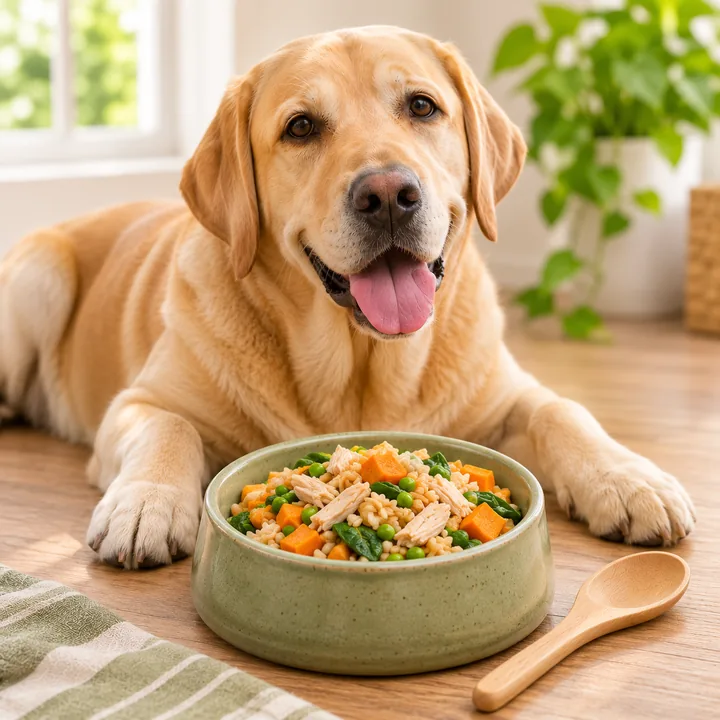
Recipes for large dogs. Large dogs eat more, so batch cooking and a freezer save time. Large-breed puppies are sensitive to errors in calcium and calories, so they need a plan from a veterinary nutritionist, not a casual recipe.
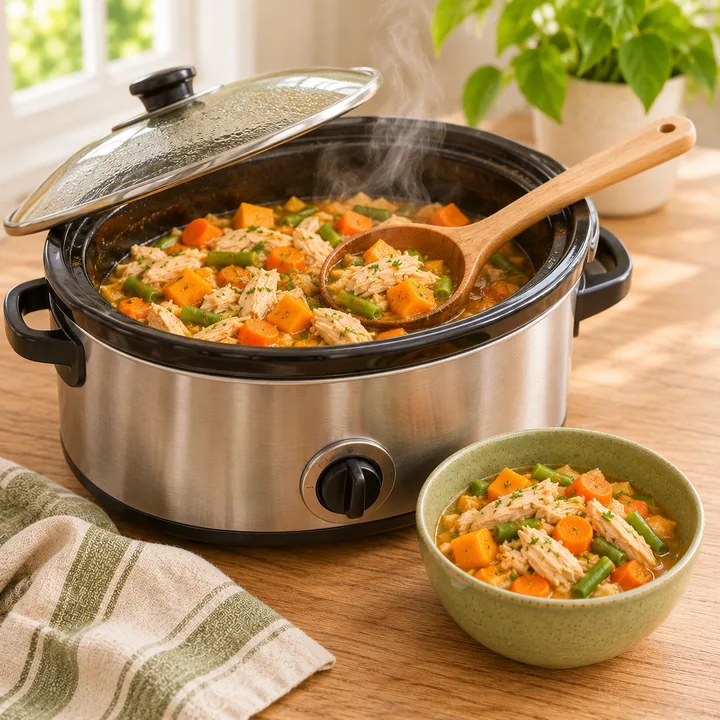
Slow cooker recipes. A slow cooker makes hands-off batches easy. Use no bones and no seasoning, cook the meat until it reaches the temperatures above, and cool the food quickly before storing it.
Not sure how much to serve? Our guide to switching has a starting-point table of calories by weight to discuss with your vet.
How we write our recipes
Every recipe on this site lists exact ingredients, safe cooking temperatures, storage times and a safety note. We write for healthy adult dogs, we name our sources when we make a health claim, and we never call a recipe "vet approved" unless a named veterinarian has reviewed it. We are not veterinarians, and nothing here replaces your vet's advice.
Read our editorial policy and medical disclaimer, and see how we earn money in our affiliate disclosure.
Natural and fresh cooked dog food: what to know
"Natural" and "fresh" describe the ingredients, not whether a meal is nutritionally complete. The recipes here are a good way to add variety and real food to your dog's bowl. For everyday feeding, choose a complete and balanced diet, or a recipe formulated for your dog by a veterinary nutritionist.
Looking for more? Read our guides on fresh cooked dog food, allergies and raw feeding.
Fresh dog food recipes: common questions
Are these recipes complete and balanced?
No. Unless a recipe says it was formulated by a veterinary nutritionist, treat it as an occasional meal or a topper. A diet fed every day must meet your dog's full nutrient needs.
Can I feed my dog only these recipes?
Not without veterinary guidance. Ask your vet whether and how to balance home-cooked meals for your dog's age, size and health.
How long do these recipes keep in the fridge and freezer?
About 3 days in the fridge in a sealed container, or up to 2 months in the freezer in single-meal portions. Cool the food quickly after cooking, and thaw it in the refrigerator.
Which ingredients should never go in dog food?
Onions, garlic, chives, grapes, raisins, chocolate, xylitol and macadamia nuts, among others. See our safety list.
Are these recipes right for puppies?
No. Puppies need precise nutrition, especially calcium and phosphorus. Ask your vet for a puppy-specific plan.
Is cooked or raw better?
Cooked is safer for most homes because cooking removes most harmful bacteria. The AVMA discourages feeding raw animal protein.
How much should I feed my dog?
Your vet can set a daily amount from your dog's weight, age and activity. Our switching guide has a table of starting-point calories by weight to discuss with your vet.
Do homemade meals need supplements?
A diet fed every day usually needs added calcium, vitamins and minerals to be complete, and the amounts matter. Ask your vet or a veterinary nutritionist rather than guessing, and do not add supplements to a recipe on your own.
How do I switch my dog to these recipes?
Gradually, over about 10 days, mixing the new food into the current food. Our switching guide has a day-by-day plan and a slower option for sensitive dogs.
What are common mistakes in homemade dog food?
The biggest are feeding an unbalanced recipe every day, leaving out calcium and other nutrients, adding onion, garlic or seasoning, changing food too fast and guessing portions. Measure meals, switch over about 10 days, and ask your vet for a balanced plan.
What are the best ingredients to use in homemade dog food?
Good building blocks are one lean protein (chicken, turkey or lean beef), dog-safe vegetables such as carrots, green beans, peas, pumpkin and sweet potato, and a plain cooked starch such as rice. Cook everything plain and leave out salt, onion, garlic and seasoning.
Is scrambled egg good for a dog?
Fully cooked egg is a common dog-safe topper. Cook it until the white and yolk are firm and leave out butter, oil, salt and seasoning. If your dog has allergies or kidney, liver or pancreas problems, ask your vet before offering it.
Cookbooks we recommend
Compare all cookbooks →Hand-picked for different dogs and kitchens.
As an Amazon Associate I earn from qualifying purchases.
These recipes are general information, not veterinary advice. See our medical disclaimer.
New to fresh food? Start here
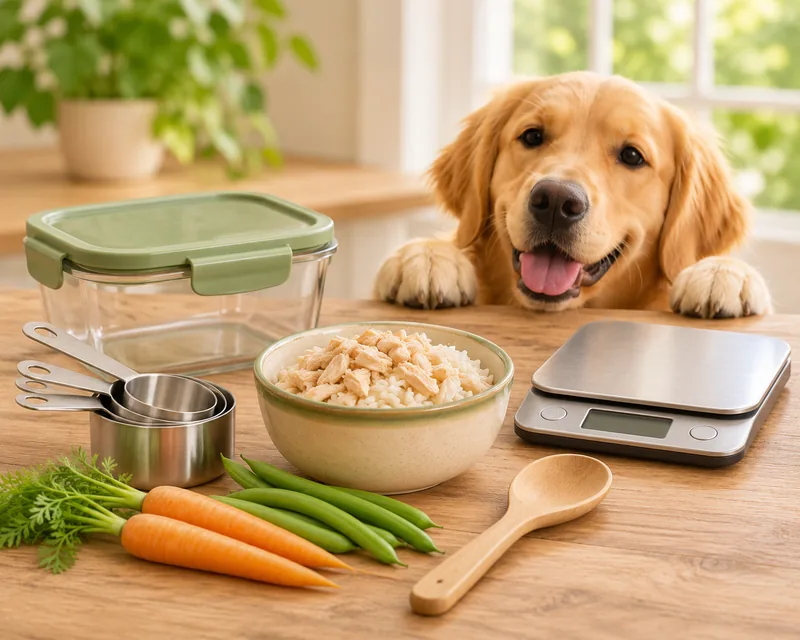
A short, safe path: how to switch, what never to feed, and how to pick a cookbook.
Start Here