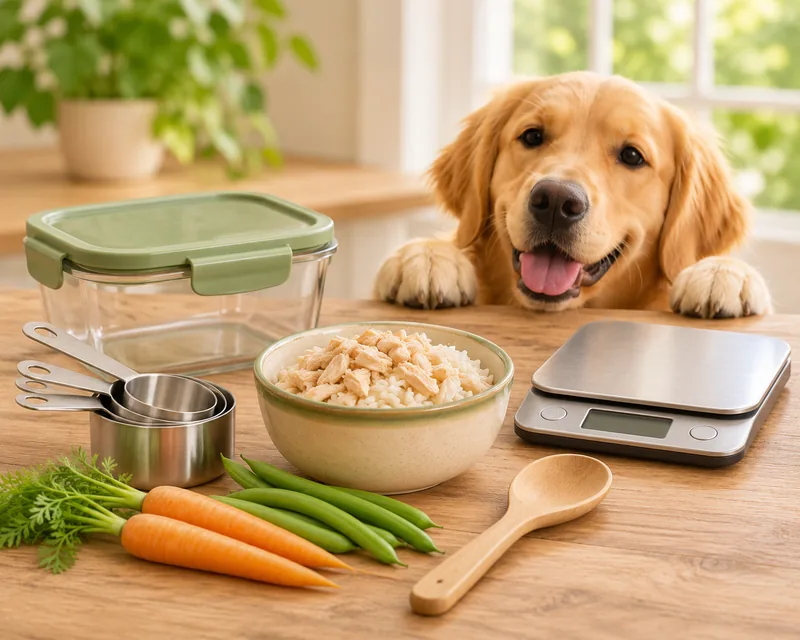
Thinking about adding fresh food to your dog's bowl? Welcome. The good news is that you can start small and safely. The honest news is that a few steps matter a lot, because feeding the wrong thing, or an unbalanced diet, can harm a dog. Follow these steps in order. Each takes a few minutes, and you can stop at any step and ask your vet.
Six steps to start safely
- Talk to your veterinarian. Mention that you want to add fresh food. They know your dog's weight, age, health and any medicines.
- Learn what never to feed. Chocolate, grapes, onions, garlic and xylitol are on the list.
- Understand "complete and balanced". It is the single most important idea in home feeding.
- Switch gradually over about 10 days to protect your dog's stomach.
- Start with a topper. Try one recipe as a small addition to your dog's regular food, keeping extras to about 10% of daily calories.
- Choose a cookbook carefully if you want more recipes, and look for veterinary nutrition authors.
Your first 10 days, step by step
- Before day 1. Talk to your vet, choose one plain recipe, get a kitchen scale and some containers, and cook and portion one batch.
- Days 1 to 3. Serve about 25% new food and 75% of your dog's current food. Keep the total calories the same.
- Days 4 to 6. If stools are firm and appetite is normal, move to half and half.
- Days 7 to 10. Move to three quarters new food, then all new food on day 10. Slow down at any step if stools soften.
- After day 10. Weigh your dog, keep extras and treats to about 10% of daily calories unless your vet says otherwise, and ask your vet before making home-cooked food the main diet.
This is the same plan as our 10-day switching guide, which also covers sensitive dogs, puppies and seniors.
Before you start: three quick questions
- Is your dog a puppy, a senior, pregnant or nursing, or living with a health condition? Home-cooked meals need a vet's plan for these dogs.
- Do you have a food thermometer, sealed containers and room in the fridge or freezer?
- Can you commit to measuring portions and weighing your dog regularly?
If you want recipes in a book
Compare all cookbooks →Three cookbooks we feature. Ask your vet to review any recipe before it becomes your dog's main diet.
As an Amazon Associate I earn from qualifying purchases.
Starting fresh: common questions
Do I have to cook for my dog every day?
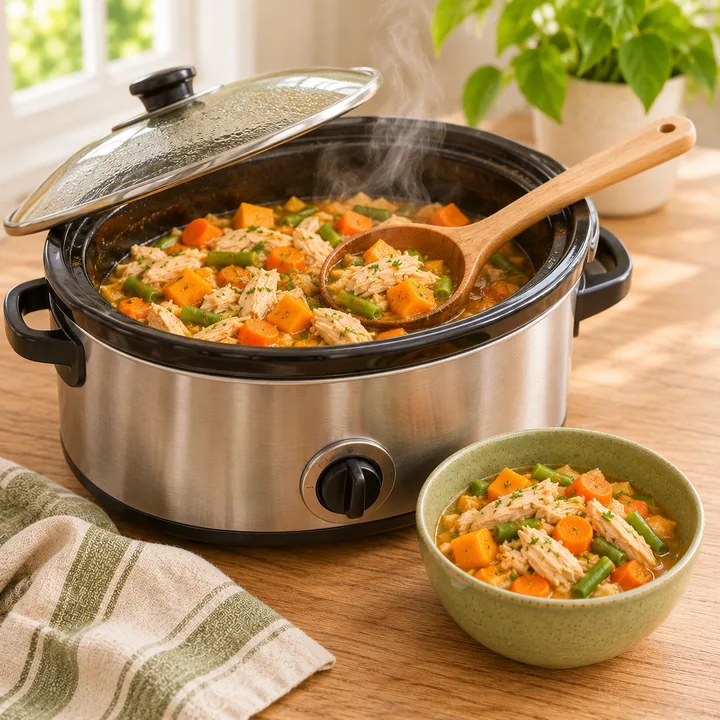
No. Many owners cook one batch, portion it into containers and freeze what they will not use within three days. Cooking once or twice a week is common.
Is fresh food safe for puppies?
Puppies need exact amounts of calcium, phosphorus and calories, so a homemade puppy diet should only be fed if a veterinary nutritionist designed it. Read our puppy nutrition page and ask your vet.
Do I need special equipment?
Not really. A kitchen scale and airtight containers make portions accurate and keep food safe, and a slow cooker makes batch cooking easier. They are optional.
Can I mix fresh food with my dog's kibble?
Yes, and many owners do. Keep the added food to about 10% of daily calories unless your vet advises otherwise, so the overall diet stays balanced.
Which foods should I never feed my dog?
The most common dangers are chocolate, grapes and raisins, xylitol, onions, garlic, chives, leeks and macadamia nuts. Salt, seasoning and cooked bones are also best avoided. If your dog has eaten something dangerous, call your vet or a poison line right away. See the safety list.
We are not veterinarians. Your vet knows your dog's health history; please check with them before changing your dog's diet. More answers are in our FAQ.