
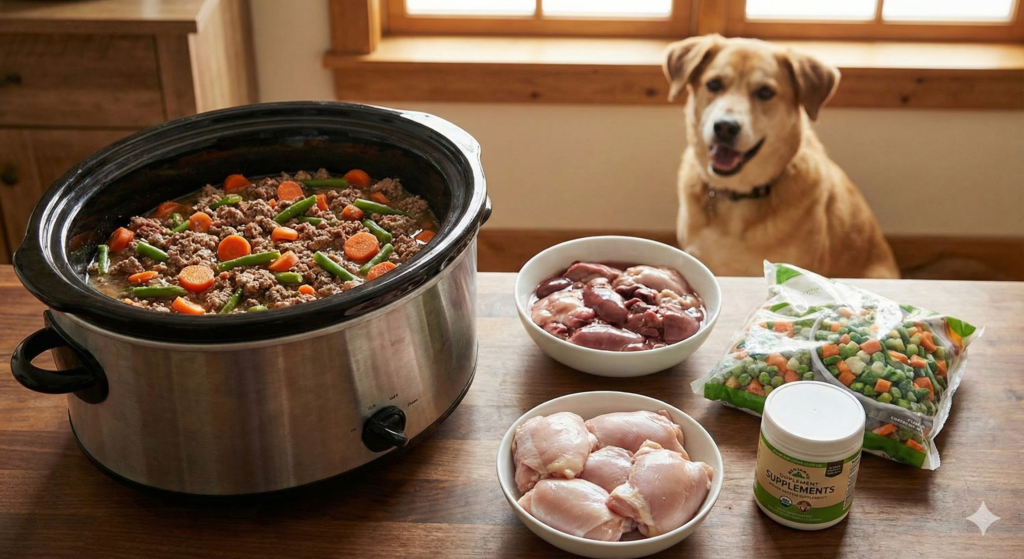
Switching to a homemade diet is the single best thing you can do for your dog's health. You control the ingredients, you eliminate preservatives, and you avoid the "mystery meat" found in commercial kibble.
However, for many beginners, the world of raw dog food recipes can be intimidating. You have to worry about bacterial safety (salmonella), handling raw organs, and—most importantly—balancing the calcium and phosphorus ratios so your dog doesn't get sick.
The good news? You don't have to start with complex raw meals. The safest and easiest way to transition is to start with Gently Cooked Fresh Food. It offers nearly all the nutritional benefits of raw, but with zero bacterial risk and much easier prep.
Why Homemade Beats Kibble
Commercial dog food is often cooked at extremely high temperatures, destroying natural enzymes and vitamins. To compensate, manufacturers spray synthetic vitamins back onto the food.
When you make food at home—whether raw or gently cooked—you are providing bioavailable nutrition. This leads to shinier coats, smaller (and less smelly!) poop, better breath, and higher energy levels. It is especially helpful for dogs with skin allergies or sensitive stomachs.
The "Cheat Code" for Beginners
If you are scared of messing up the nutrient balance (which is a valid concern!), we strongly recommend starting with a guide. You shouldn't guess when it comes to your dog's health.
Our top recommendation for 2025 is the Slow Cooker Dog Food Cookbook. While it focuses on "cooked" meals, it is the perfect stepping stone to fresh feeding. It allows you to buy raw ingredients (beef, turkey, carrots, spinach) and turn them into safe, balanced meals with just 10 minutes of prep.

Slow Cooker Dog Food Cookbook
The hardest part of homemade dog food is time and safety. This book solves both. It features nutrient-packed recipes where you simply toss the ingredients into a crockpot.
It is ideal for beginners because it eliminates the fear of bacteria associated with raw feeding, while still giving your dog whole, fresh ingredients. Plus, it's fantastic for meal-prepping in bulk.
The 5:1:1 Ratio Explained
Whether you are feeding raw or cooked, you cannot just feed meat. A dog in the wild eats the whole animal (bones, organs, stomach contents). To replicate this at home, nutritionists use the "5:1:1 Ratio" as a starting point:
- 5 Parts Muscle Meat: Lean ground beef, turkey, or chicken thigh (boneless). This provides the protein foundation.
- 1 Part Organ Meat: Liver, kidney, or spleen. This is nature's multivitamin. *Caution: Don't overdo liver as it's very rich.*
- 1 Part Veggies/Fruit: Spinach, carrots, blueberries, or pumpkin. These provide fiber and antioxidants.
Essential Gear for Homemade Dog Food
To make the process fast and safe, having the right tools makes a huge difference. Here are the two items we use in our own kitchen:

Heavy Duty Meat Grinder
If you want to save money by grinding your own chicken/turkey (including bone!), this is the gold standard.
Check Price
Glass Meal Prep Containers
Plastic holds bacteria. We strictly use these glass containers for freezing daily portions safely.
Check PriceFAQ & Safety Guide
Can I use raw meat from the grocery store?
Yes, but standard grocery store meat is intended to be cooked. If you are feeding it raw, you must freeze it for at least 3 weeks to kill parasites, or buy "Human Grade" meat. This is why we recommend the Slow Cooker method for beginners—cooking kills the pathogens instantly.
How long does homemade food last?
Cooked fresh food lasts 3-4 days in the fridge. We recommend cooking a large batch on Sunday, keeping 3 days' worth in the fridge, and freezing the rest in daily portions.
Is this cheaper than kibble?
It is usually slightly more expensive than budget kibble, but significantly cheaper than "Premium" kibble or vet bills. You can save money by buying meat in bulk or looking for "Manager's Specials" at your local grocery store.
Disclaimer: We are not veterinarians. The recipes and advice here are for educational purposes. Always consult your vet before changing your dog's diet, especially if they have health conditions like pancreatitis or kidney disease.